Screenplay by Makoto Ueda
Starring Kazunari Tosa, Riko Fujitani, Gota Ishida
Produced by Europe Kikaku
Why It's Overlooked
Beyond the Infinite Two Minutes arrived in the West trailing modest festival buzz and almost no theatrical footprint. A Japanese science fiction comedy shot on consumer cameras in a single continuous take, running barely seventy minutes, made by a theatrical troupe who had never made a feature film before — the combination of factors that make it remarkable are the same factors that caused distributors to hesitate and critics to struggle with where to file it. It played Fantasia International Film Festival in 2021, won the top prize, and then largely evaporated from English-language discourse. The film received no wide theatrical release in North America, landed on streaming platforms without promotional support, and was never translated into the awards-season conversation that might have elevated its profile. For a film this accomplished, that silence is astonishing.
Part of the problem is that the film's central achievement — its unbroken single-take structure — is the kind of formal virtuosity that audiences either can't perceive (because it looks casual) or mistake for a gimmick (because they don't understand what it requires). Unlike the ostentatious long takes of 1917 or Birdman, which announce themselves with restless camera movement and obvious technical showmanship, Yamaguchi's approach is deceptively quiet. The camera mostly sits still. The locations are small. The cast is small. There is nothing here that looks expensive or difficult — and so the difficulty is invisible. That invisibility is the achievement, and it goes unnoticed precisely because it succeeds so completely.
What Makes It Great
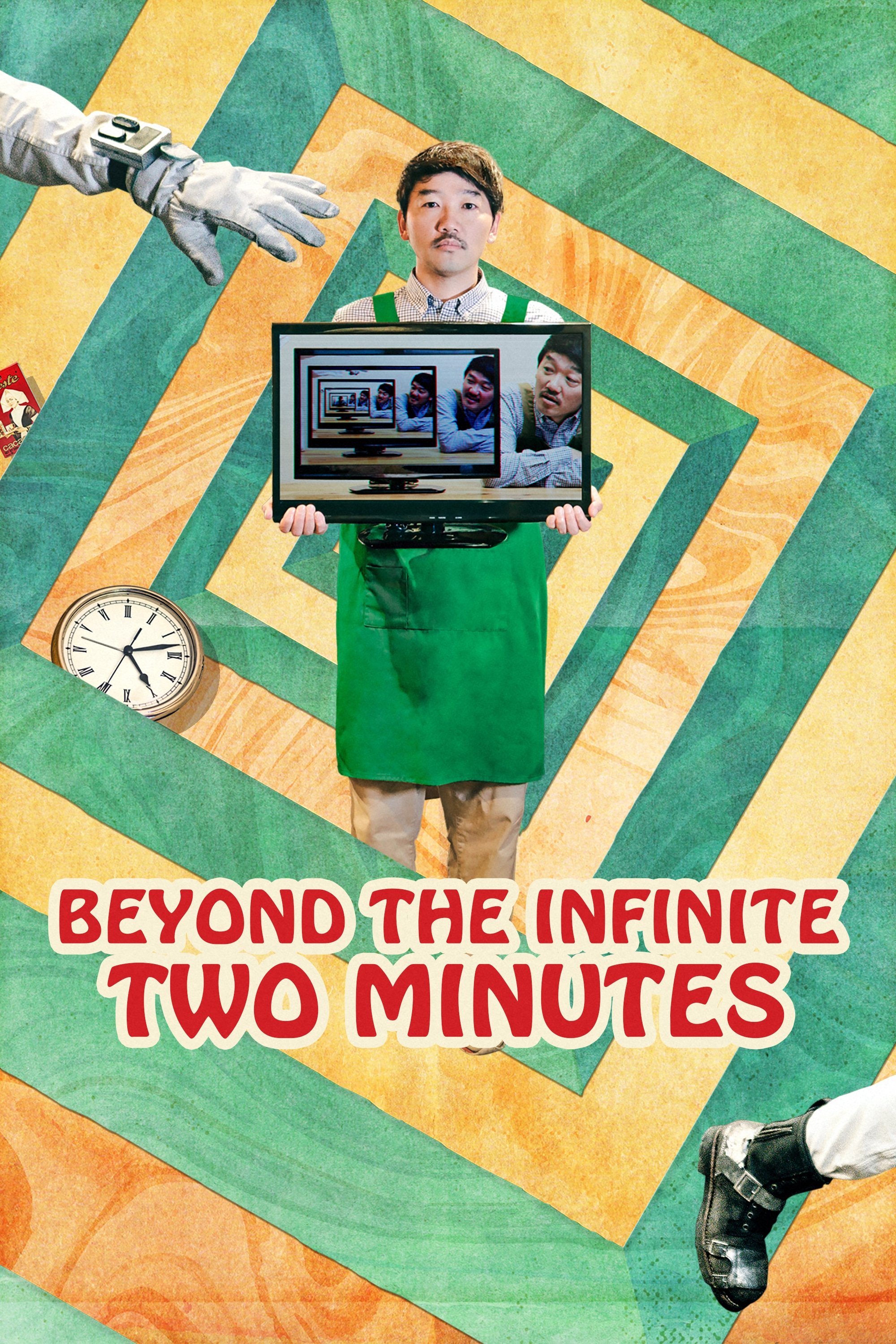
The premise is disarmingly simple: Kato, a coffee shop owner in Kyoto, discovers that the television monitor downstairs in his cafe shows footage from exactly two minutes in the future. When he carries his laptop upstairs to verify this, he realizes that the monitor now shows him — upstairs — talking to himself downstairs. The loop is closed. The paradox is established. And then screenwriter Makoto Ueda, with extraordinary wit and precision, begins methodically building the implications of that paradox outward, layer by layer, until the film achieves a kind of recursive delirium that makes Primer look simple and Groundhog Day look lazy.
What makes the film more than its clever central mechanism is the warmth of the ensemble at its center. Kato and his friends are drawn with immediate specificity: the slacker, the romantic, the skeptic, the opportunist. Their relationships feel genuine even as the situation spirals into absurdity. The film never loses sight of the human comedy underpinning the temporal one. When the group begins exploiting the two-minute window for petty gains — predicting which customer will order what, engineering small social advantages — the humor is enormously recognizable: these are exactly the first things anyone would actually do with two minutes of foresight. The film's great joke is that the future, when it arrives two minutes early, turns out to be mostly mundane. And yet those two minutes become the most consequential thing in the world.
The single-take execution, achieved through careful choreography and the clever use of monitors within monitors within monitors, gives the time loop mechanics a spatial logic that most films in the genre can't match. You are never confused about where you are in the timeline because the physical world of the film is so precisely controlled. Yamaguchi and his troupe rehearsed for months to achieve a seventy-minute take that requires precise comic timing, spatial awareness, and an almost musical sense of rhythm. That they pulled it off — in a real coffee shop in Kyoto, with consumer equipment and no budget — is one of cinema's more improbable accomplishments.
Who Should Watch It
This film is essential for anyone who has ever loved a time loop story and wanted more formal ingenuity than the genre typically offers. If Groundhog Day charmed you but left you wondering what a filmmaker with real philosophical ambitions could do with the same premise, this is the answer. Fans of puzzle-box cinema — the audience for Coherence, Primer, Timecrimes — will find in Yamaguchi's film a rare example of the genre working at the level of pure logical elegance without sacrificing warmth or humor. And for anyone interested in the extraordinary ecosystem of Japanese theatrical troupes, which have produced some of the most formally inventive genre filmmaking of the past decade, this is the ideal entry point: accessible, funny, short, and staggeringly clever. The film runs seventy minutes. You have no excuse.
Sonora Festival Context
The 2023 Sonora Film Festival chose Beyond the Infinite Two Minutes to open the program and awarded it Best Picture — the festival's highest honor, reached with unusual speed and unanimity. The festival wanted to establish its thesis immediately: that the most inventive cinema in the world is often made with the least money, and that formal ambition is entirely independent of budget. A seventy-minute Japanese comedy about a two-minute time loop, shot in one take in a real coffee shop, is the perfect crystallization of everything the Sonora Film Festival exists to celebrate. It is a film that could not have come from a studio system. It could not have survived a development process. It required the freedom of absolute constraint — no money, no crew, no infrastructure — to become the thing it is.
Audience response was rapturous. The film screened to a packed room and generated the kind of sustained laughter — not just at jokes, but at the film's sustained logical audacity, at each new layer of recursion, at the sheer delight of watching something clever become more clever — that is the highest compliment a comedy can receive. Several audience members reported re-watching the film immediately upon returning home, wanting to trace the architecture they had only partially perceived on first viewing. That is the mark of a film built to reward attention, and the Sonora Film Festival could not be more proud to have brought it to this audience.
← Back to 2023 SelectionsSee Also
More from the 2023 Sonora Film Festival: