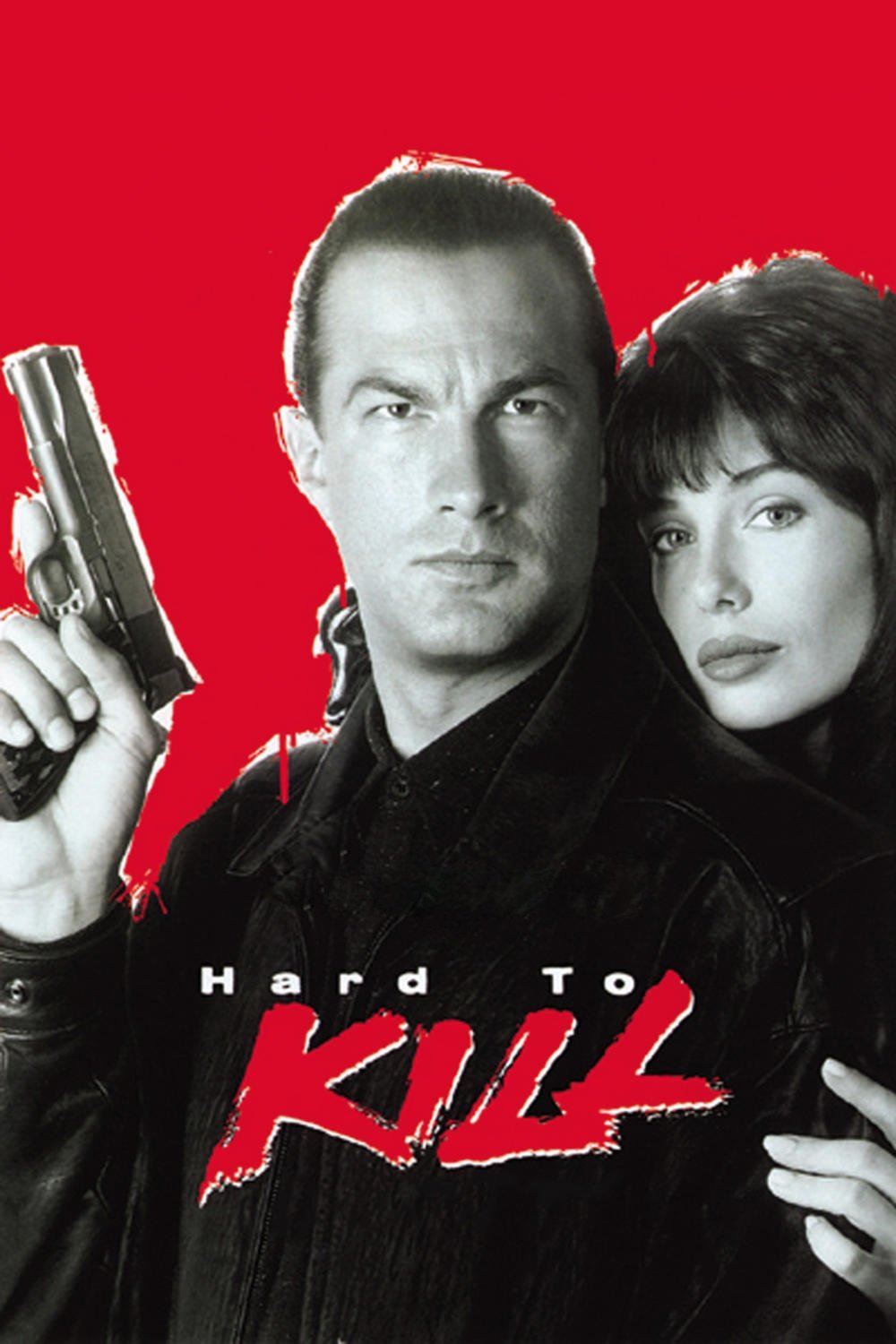
Screenplay by Steven McKay
Starring Steven Seagal, Kelly LeBrock, Bill Sadler, Frederick Coffin
Music by David Michael Frank
Why It's Overlooked
Hard to Kill occupies a strange and unjust position in the history of action cinema: it is widely recognized as one of the defining films of Steven Seagal's peak period, and yet it is almost never discussed in serious terms. The name "Steven Seagal" functions as a critical off-switch for most film commentary — a signal that we are in the territory of guilty pleasure, ironic appreciation, or simple dismissal. This is a failure of critical seriousness masquerading as sophistication. Hard to Kill is a lean, perfectly constructed revenge thriller that does exactly what the best genre films do: it establishes its world with economy, invests you in its protagonist, and then delivers sustained catharsis with craft and conviction. The fact that its star is the object of an ongoing cultural joke says everything about how we categorize certain kinds of masculinity in popular cinema and nothing at all about the quality of the film.
The late 1980s and early 1990s produced an extraordinary crop of action cinema that has been largely consigned to the VHS nostalgia bin without serious reappraisal. Films like Hard to Kill are rarely discussed as objects of craft — the kind of genre execution that deserves the same careful attention we give to, say, a John Carpenter film or a Walter Hill picture. This is a mistake. Malmuth and Seagal made something effective here, and the dismissal of that effectiveness tells us more about critical hierarchies than it does about the film.
What Makes It Great
The structural elegance of Hard to Kill is its least-discussed and most important quality. The film divides cleanly into three acts of unusual discipline: the setup (Seagal's detective Mason Storm uncovers corruption, survives an assassination attempt), the recovery (seven years in a coma, awakening, the slow reclamation of physical capability), and the revenge (methodical, relentless, deeply satisfying). What distinguishes this architecture from a hundred comparable films is the extended middle section — the coma and recovery — which gives the film an emotional rhythm that most action movies of the era refused to attempt. Mason Storm earns his revenge in a way that feels costly. He has lost years, lost his family, lost everything. When he delivers on his promise to "take it to the bank," the phrase lands with a weight it would not have if the film had simply cut from the shooting to the payback.
Seagal's aikido choreography is at its purest here. The fights are short, violent, and conclusive — there is no unnecessary extension of combat for spectacle's sake. When Seagal's Mason Storm neutralizes a threat, the threat is neutralized, and the film moves on. This economy of violence is a stylistic choice that reflects the character's training and mindset, and it gives Hard to Kill a physicality that feels disciplined rather than merely brutal. The final showdown, staged with a cold clarity that the word "cathartic" was invented to describe, is among the most satisfying conclusions in the genre.
Who Should Watch It
Hard to Kill is for anyone who has ever loved a revenge film without apology — who has ever found themselves invested in the methodical accumulation of grievances and the promise of their eventual resolution. If you grew up with action cinema of the late 1980s and early 1990s and want to revisit it with fresh eyes, this is where to start: a film that holds up not as a relic of the era but as a genuine example of genre craft. If you are encountering Seagal for the first time, this is the correct entry point — the film in which his screen presence, his physical skill, and the material all align at peak quality. And if you are the kind of viewer who suspects that genre films have been systematically undervalued by critical culture and wants a concrete example to argue from, look no further.
Sonora Festival Context
The 2025 festival's selection of Hard to Kill is a deliberate act of critical rehabilitation. The Sonora Film Festival has always believed that the genre hierarchies that make serious critics dismiss Steven Seagal films as inherently beneath discussion are themselves the object of critique, and that one of the most useful things a festival can do is insist on taking seriously the films that the institutional machinery of taste-making has decided to condescend toward. Hard to Kill is a well-made film. Its dismissal is a critical failure, not a critical judgment.
The festival jury noted in particular the film's structural efficiency — the way its three-act architecture builds genuine emotional investment rather than simply arranging set pieces — and Seagal's underappreciated physical precision in the fight sequences. The film took home Best Quote for "I'm gonna take you to the bank, Senator Trent. To the blood bank!" — a line the committee felt required no defense and received none — along with Worst Movie and Worst Actor for Steven Seagal, both awarded with the full understanding that in the Sonora Film Festival's vocabulary, these are complicated forms of praise. This is not ironic appreciation. This is serious attention paid to a film that deserves it, from a festival that exists precisely to pay that kind of attention to precisely these kinds of films. Mason Storm said he'd take it to the bank. The 2025 Sonora Film Festival agrees.
← Back to 2025 SelectionsSee Also
More from the 2025 Sonora Film Festival: