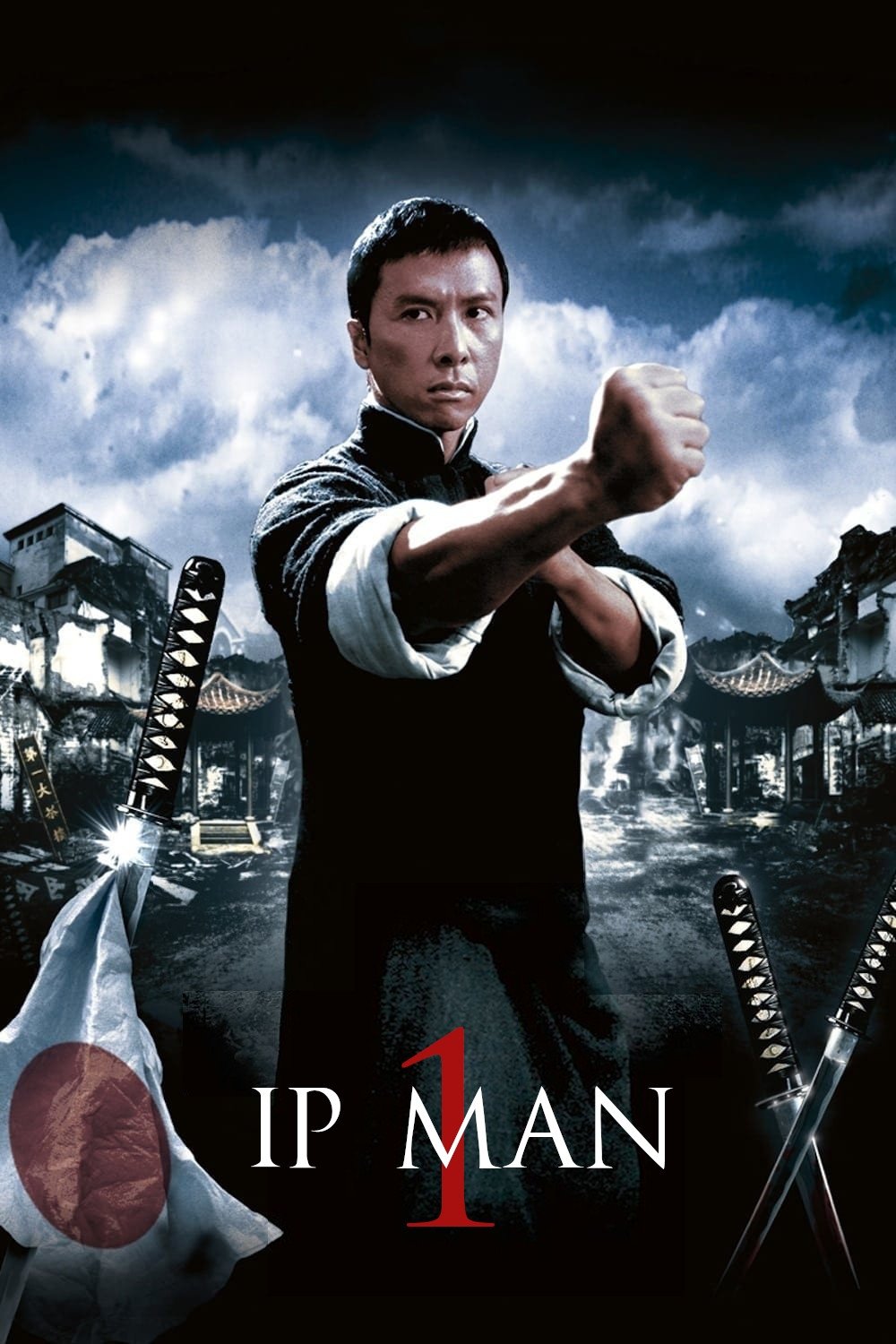
Screenplay by Edmond Wong
Starring Donnie Yen, Simon Yam, Lynn Hung, Hiroyuki Ikeuchi
Action Choreography by Sammo Hung
Why It's Overlooked
Ip Man has a paradox at its core: it is simultaneously one of the most beloved martial arts films ever made among genre devotees and almost entirely absent from the conversations that shape canonical film criticism in the West. Released in Hong Kong in late 2008, the film dominated Asian box offices, launched one of the most successful martial arts franchises in cinema history, and gave Donnie Yen the role that would define his legacy. And yet when Western critics and awards bodies assembled their lists of the decade's best films, Ip Man was nowhere to be found — not because it hadn't been seen, but because the architecture of critical respectability has never quite known what to do with a film that excels so completely at something it has already decided to condescend toward.
The condescension toward martial arts cinema runs deep and long. Since the genre's golden age in the 1970s, action films from Hong Kong and mainland China have been categorized as a kind of lower entertainment — exciting, perhaps, but not serious, not artistic, not the kind of thing one includes in serious discussions of the medium. This is a failure of imagination so total it has become invisible. Ip Man is a masterwork of physical cinema, and physical cinema — the art of using the human body in motion to express character, theme, and emotion — is one of the medium's most demanding and undervalued disciplines. Wilson Yip and choreographer Sammo Hung understand this. Most critics reviewing their films do not.
The film's biographical subject compounds the oversight. Ip Man, the grandmaster who taught Wing Chun to a young Bruce Lee, is one of the most consequential figures in the history of martial arts, and therefore in the history of global popular culture. The man without whom there is no Bruce Lee deserves a film of towering quality. He received one. Almost no one in the West noticed.
What Makes It Great
The greatness of Ip Man begins and ends with Donnie Yen, who delivers what is simply the finest martial arts performance in cinema history. Yen had been a star for decades by 2008, but this is the film that revealed his full range — not merely as an athlete of extraordinary technical precision, but as an actor of genuine depth and restraint. His Ip Man is a man of supreme capability and utter understatement: quiet, domestic, almost self-effacing, his devastating skill visible only in the fluid economy of his movements and the absolute calm with which he meets every challenge. The performance is built from stillness, and it is that stillness that makes the explosions of action so devastating. When Ip Man fights, it is not spectacle. It is revelation of character.
The film's most celebrated sequence — in which Ip Man faces ten Japanese fighters simultaneously, moving through them with a controlled fury that is as close to poetry as cinema gets — earns its emotional weight because of everything that precedes it. The occupation of Foshan, the humiliation of a culture and a community, the death of a friend: these are not backdrop. They are the engine of the scene, and Yen carries all of it in his body. The fight is grief and anger and dignity made physical, and it is the rare action sequence that leaves you feeling something profound rather than merely impressed.
Sammo Hung's choreography is the other towering achievement. Wing Chun as Hung renders it here is a style of devastating efficiency — close-range, relentless, built on centerline control and simultaneous attack and defense. The fights are fast and clear and precisely filmed, without the overcutting that obscures action in most contemporary Western cinema. You see exactly what is happening, and what is happening is extraordinary. This is the craft of action filmmaking at its highest.
Who Should Watch It
Ip Man is essential viewing for anyone who has ever been moved by physical cinema — by the stunt work of Buster Keaton, the athleticism of Gene Kelly, the balletic violence of a John Woo shootout. If you were among the many who discovered martial arts film through Enter the Dragon or the classic Shaw Brothers catalog and have been searching for something that matches that standard of craft, this is the film. If you have simply been told it is good and haven't found the time, stop waiting. The film demands nothing of you except attention, and it repays that attention a hundredfold. And if you have never seen a martial arts film — if the genre has always seemed like something for someone else — this is the ideal starting point: a film with the dramatic weight of a prestige biopic and the physical artistry of the greatest action cinema ever made.
Sonora Festival Context
The selection of Ip Man for the 2025 Sonora Film Festival is in some ways the festival operating in its most essential mode: identifying a film that the Western critical establishment has systematically undervalued and insisting, loudly and without apology, that the failure of recognition is the establishment's and not the film's. Ip Man is not a cult film. It is not a genre curiosity. It is a masterwork that happens to be a martial arts film, which means it has spent seventeen years being celebrated by everyone except the people who write the canonical histories of cinema.
The 2025 festival jury found in Ip Man exactly what the Sonora Film Festival exists to celebrate. The film took home Best Picture — the festival's highest honor — along with Most Reckless Disregard for Human Life and Public Property, and The Weng Weng Award for Excellence, shared with Challenge of the Tiger. Donnie Yen's performance is one of the great physical and dramatic achievements in the history of the medium, and it belongs in every conversation about acting that the medium has. Wilson Yip's direction is precise, humane, and formally accomplished in ways that the critical language for discussing action cinema is still struggling to describe. Sammo Hung's choreography is as much a feat of cinematic authorship as any editing or cinematography work praised in the same era. Together they made a film that does what the very best films do: it enlarges your sense of what is possible. Go watch it, and then argue with anyone who says it doesn't belong in the conversation.
← Back to 2025 SelectionsSee Also
More from the 2025 Sonora Film Festival: