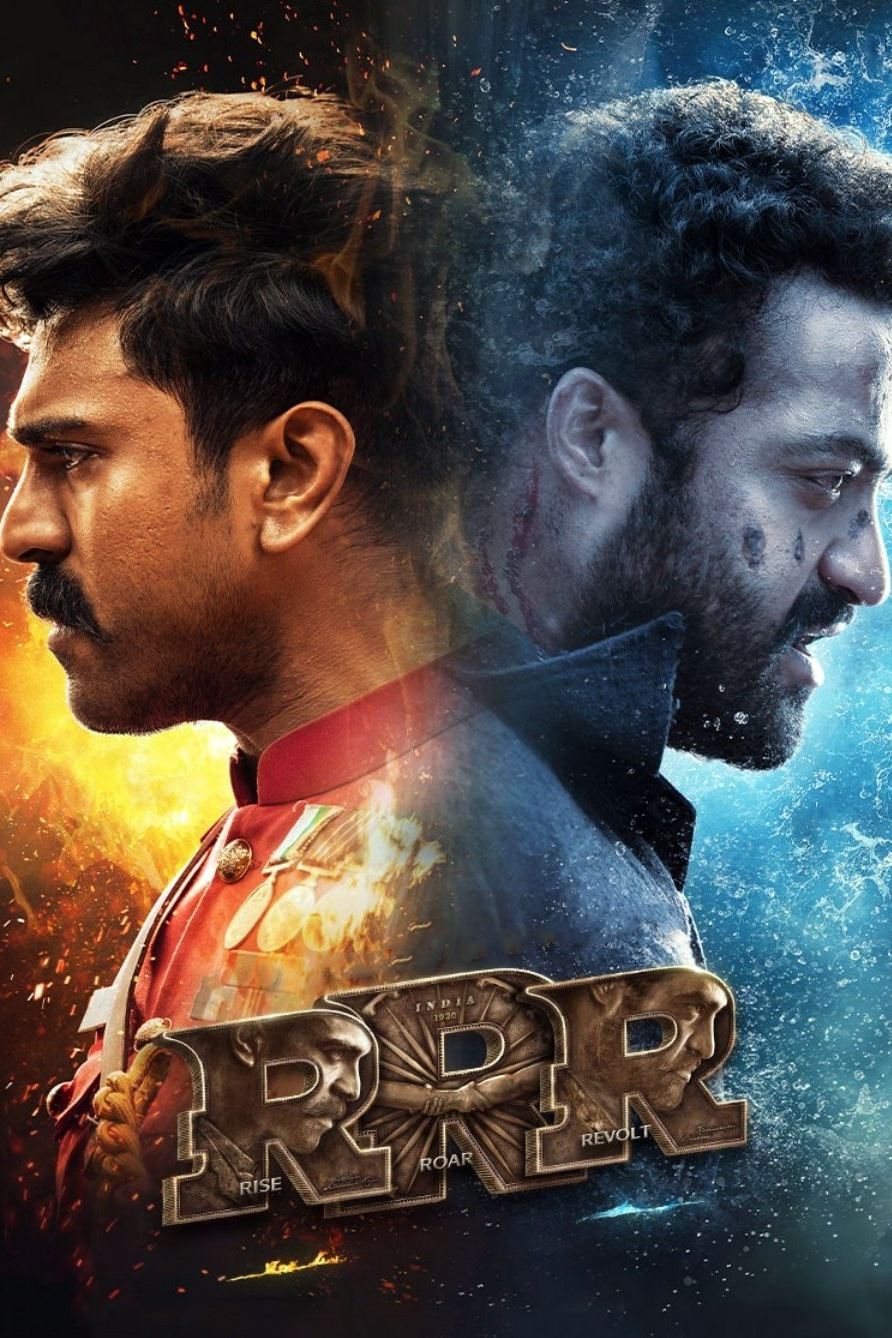
Screenplay by S. S. Rajamouli & V. Vijayendra Prasad
Starring N. T. Rama Rao Jr., Ram Charan, Ajay Devgn, Alia Bhatt
Music by M. M. Keeravani
Why It's Overlooked
RRR won an Oscar. And yet it remains one of the most unjustly overlooked films in recent memory among Western cinephiles — not because it failed, but because the systems through which Western audiences discover cinema are still profoundly ill-equipped to handle a film like this. Released in Telugu in March 2022, RRR swept through India with record-shattering numbers, becoming the highest-grossing Indian film of the year worldwide. But when it arrived in Western markets, it came as a streaming afterthought: dubbed, quietly added to Netflix's "World Cinema" shelf, and largely sidestepped by the awards conversations that shape critical taste-making in the United States and Europe. The film's unapologetic embrace of melodrama as a structural pillar, its operatic emotional register, and its staggering 187-minute runtime all conspired against it in a critical culture that prizes restraint and minimalism above almost everything else.
The irony is breathtaking. "Naatu Naatu," the film's celebrated musical centerpiece, became the first Asian song to win a Golden Globe for Best Original Song, then swept the stage at the 95th Academy Awards to claim the Oscar in the same category — the first Indian song ever to do so. Director S. S. Rajamouli was named Best Director by the New York Film Critics Circle, a signal honor from an institution that helped cement the reputations of Scorsese, Kubrick, and Altman. And yet the film itself — the three-hour spectacle those trophies were trying to describe — largely failed to cross the consciousness of the audiences who applauded its wins. The trophies were celebrated; the film was not truly seen.
This is the stubborn machinery of cultural gatekeeping at work. Films in non-English languages are consistently funneled toward art house audiences, reviewed through the lens of "world cinema," and evaluated against a set of expectations — austerity, realism, symbolism — that have nothing to do with what RRR is doing and everything to do with what Western critics have decided "foreign" film is supposed to be. RRR is a mainstream blockbuster of uncommon ambition and craft. Its overlooked status in the West says nothing about its quality and everything about our blind spots.
What Makes It Great
Rajamouli orchestrates action at a scale that makes most Hollywood blockbusters look timid. The film opens with a sequence in which Komaram Bheem (N. T. Rama Rao Jr.) subdues a tiger — not through digital trickery but through physical performance and stunt work that feels both impossible and entirely earned. The film's centerpiece set piece, in which Bheem and Alluri Sitarama Raju (Ram Charan) together face down a menagerie of wild animals unleashed on a British colonial crowd, is among the most audacious sequences in the history of action cinema: chaotic, brutal, formally precise, and somehow both terrifying and exhilarating at once. But Rajamouli is a master of contrast — he matches each thundering spectacle against a moment of genuine emotional intimacy, ensuring that the action lands because we care so deeply about the people caught within it. The choreography is not flash; it is character.
What separates RRR from spectacle-for-spectacle's-sake filmmaking is its extraordinary investment in the friendship at its core. The relationship between Bheem and Raju — adversaries who become brothers before fate forces them to opposing sides of a moral crisis — is rendered with a tenderness that recalls the great buddy pictures of Hollywood's golden age while transcending their conventions entirely. The film's climactic "Dosti" (friendship) sequence is cinema at its most earnest and unguarded, a mode that contemporary Western criticism has too often dismissed as naïve. Rajamouli and screenwriter V. Vijayendra Prasad understand something that Hollywood has largely forgotten: earnestness, deployed with sufficient craft and conviction, is not sentimentality. It is the rawest form of emotional truth. And RRR, for all its impossible scale, is above all a deeply, sincerely felt film about the bonds that forge heroes.
Who Should Watch It
RRR is essential viewing for anyone who loves cinema without borders. If you have ever been moved by the monumental scale of old Hollywood epics — the chariot races of Ben-Hur, the parting seas of The Ten Commandments — and found yourself wondering why modern blockbusters have lost that capacity for awe, this is the film you have been waiting for. Action enthusiasts who feel superhero cinema has forgotten how to make audiences feel something beyond spectacle will find in RRR a reminder of what the genre can accomplish when emotional stakes are as high as the physical ones. And for anyone curious about the extraordinary creative ecosystem of Indian popular cinema — its willingness to embrace scale, emotion, music, and myth simultaneously — RRR is the perfect entry point: generous, overwhelming, and impossible to forget. If you have ever felt your pulse quicken at a Sergio Leone standoff or a John Woo bullet-ballet, you already have the sensibility for what Rajamouli is building here. You simply need the opportunity to experience it.
Sonora Festival Context
At the 2022 Sonora Film Festival, RRR swept the room. It took home Best Picture — the festival's highest honor — and was so dominant in the room that the Best Scene award went simply to "Any/Every Scene, RRR," the committee unable and unwilling to single out one moment from a film where nearly every sequence competes for the title. The film also earned the inaugural Most Vin Diesel-Like Performance award for the tiger fight sequence, a distinction that captures something the more genteel awards bodies couldn't quite say out loud: that RRR operates at a pitch of physical, operatic, chest-beating intensity that makes Vin Diesel's entire action filmography look like a polite conversation.
RRR earned those awards because it did something almost no film does anymore: it delivered on every promise, simultaneously, without apology. Best Picture because the film is a genuine masterwork — emotionally devastating, formally audacious, technically astonishing, and built around a friendship so convincingly rendered that you feel its weight when it is tested. Best Scene at every scene because Rajamouli constructs the film as a sustained series of peaks, each one surpassing the last, from the opening tiger subdual to the animal-liberation set piece to the climactic "Dosti" sequence, which resolves the film's central moral crisis with such operatic conviction that you don't notice you're weeping until it's over. And the Vin Diesel award because the tiger fight — in which Komaram Bheem wrestles an actual apex predator while suspended mid-air, using a motorcycle as a lever and his own body as a fulcrum — achieves a strain of impossible physical charisma that belongs to an entirely different category of action filmmaking than anything Hollywood is currently producing.
The Sonora Film Festival exists to identify films that the mainstream has mishandled, undersold, or outright ignored, and to give them the audience they deserve. RRR is the clearest example in the festival's history of why that mission matters: a film with Oscar wins on its mantle that still managed to remain largely unseen in the West, passed over by audiences who cheered its trophies and then streamed something else. If you haven't seen it, the festival's judgment stands. Go watch it immediately.
← Back to 2022 SelectionsSee Also
More from the 2022 Sonora Film Festival: