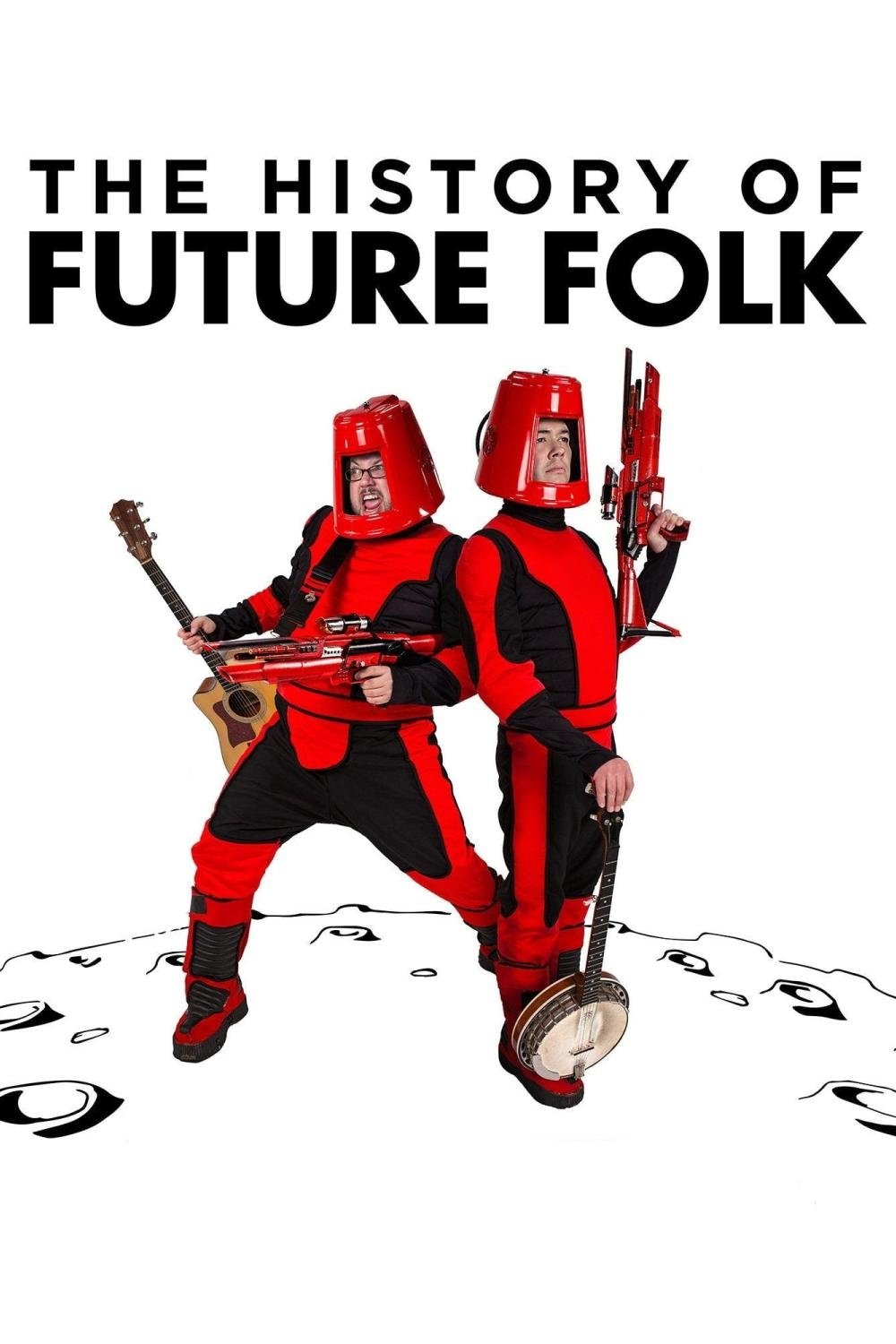
Starring Nils d'Aulaire, Jay Klaitz, Julie Ann Emery
Festival Tribeca Film Festival 2012 — Official Selection
Why It's Overlooked
The History of Future Folk is the kind of film that gets classified as "charming" and then quietly forgotten — a fate that befalls excellent small films with some regularity. It premiered at Tribeca in 2012, received warm notices from critics who appreciated its peculiar combination of earnestness and absurdism, and then disappeared into the streaming void with almost no promotional infrastructure to support it. The film's premise — aliens from the planet Hondo who become bluegrass musicians in Brooklyn — does not easily fit into existing marketing categories, and its refusal to be either a straightforwardly comic sci-fi parody or a conventionally heartwarming indie dramedy left distributors uncertain about how to position it. It was too strange for the mainstream and too accessible for the cult niche.
The film is also hurt, paradoxically, by the real band at its center. Nils d'Aulaire and Jay Klaitz, who play the alien musicians General Trius and Kevin, are the actual members of the folk duo Future Folk, and the film grew out of their live comedy performances. This origin story — folk musicians making a movie about their folk musician characters — makes the project sound like a vanity project or a promotional vehicle, which it emphatically is not. It is a real film, with real stakes and genuine emotional weight, and the musical performances at its center are legitimately excellent. But the combination of real-band origins and low-budget production creates an impression of amateurism that the film's actual quality does not support.
What Makes It Great
The film's central conceit — that music does not exist on the planet Hondo, and that General Trius's first encounter with it (a woman playing banjo in a park in Brooklyn) is so overwhelming that it short-circuits his entire mission — is handled with a delicacy and philosophical seriousness that the premise might not seem to warrant. The question the film is actually asking is: what is music for? And its answer, delivered through the spectacle of an alien in a space helmet experiencing a banjo for the first time, is quietly devastating: music is the thing that makes existence bearable. It is the reason you don't blow up a planet. It is evidence that the universe contains something worth protecting. That argument, made through bluegrass and deadpan comedy, lands with more force than most serious films manage with all their resources.
Nils d'Aulaire's performance as General Trius is a small masterpiece of deadpan physical comedy. He plays the character with the total conviction of a man who has agreed to pretend he is an alien and has committed to that premise so completely that it stops being pretending. His interactions with the human world — puzzled, earnest, perpetually slightly off-register — generate a very specific kind of warmth: the warmth of watching someone encounter the ordinary world for the first time and find it astonishing. The film's Brooklyn setting, populated with the usual range of musicians and artists and eccentrics, provides a community that is itself slightly alien, slightly outside the mainstream, and therefore the ideal place for an actual alien to disappear. The film understands, with genuine insight, that the people who make folk music in Brooklyn are exactly the people who would not find an alien from Hondo implausible.
Who Should Watch It
The History of Future Folk is required viewing for anyone who loves science fiction that uses its speculative premise as a vehicle for genuine emotional inquiry rather than as an occasion for spectacle. The film asks what music means, what it means to choose to stay somewhere against your mission, what it costs to love a world you were sent to destroy — and it asks all of these questions through the medium of folk music performed by aliens in space helmets, which is the correct vehicle for them. Fans of warmhearted indie comedy, of the tradition that runs from Galaxy Quest through Safety Not Guaranteed to this film, will find in it a worthy entry in that lineage. And for anyone who has ever been moved by a piece of music to do something they hadn't planned to do, the film is a reminder that this is not a small thing. It may be the most important thing.
Sonora Festival Context
The 2023 Sonora Film Festival closed its program with The History of Future Folk, and the choice was deliberate. After an evening that included a Filipino spy film, a Spanish slasher, an Australian superhero parody, and a Japanese time loop comedy, the festival wanted to end on something that synthesized all of the program's values: formal inventiveness, genuine heart, a refusal to take itself too seriously while taking its central question seriously indeed. The History of Future Folk accomplishes all of those things. It took home Best Song, Theme, or Soundtrack — a category in which no other film came close — and Most Politically Incorrect Moment for "the scene," which the committee declined to describe in the award citation and declines to describe here. It is funny and it is moving and its music is good, and by the end of it you have been persuaded that an alien from a planet without music might reasonably decide that Earth is worth saving.
The closing musical performance — d'Aulaire and Klaitz performing as Future Folk, in character, the film having gradually persuaded you that this is the most natural thing in the world — generated a sustained standing ovation from the 2023 audience. Not the polite standing ovation of obligation, but the real thing: people who had been moved and wanted to express it through the only physical mechanism available. The Sonora Film Festival exists to create those moments. The History of Future Folk delivered one of the finest in the festival's history, and we are grateful to it for that.
← Back to 2023 SelectionsSee Also
More from the 2023 Sonora Film Festival: